
South Carolina's summer heat can reduce EV battery efficiency by up to 17%, while our mild winters barely impact range at all - making the Palmetto State surprisingly ideal for electric vehicle ownership. If you're considering making the switch to electric in Greenville, SC, understanding how our unique climate affects different EV models will help you choose a vehicle that performs reliably year-round. This guide breaks down which electric vehicles excel in our hot, humid summers and occasional cold snaps, while highlighting the charging infrastructure throughout the Upstate region.
How Greenville's Climate Impacts Electric Vehicle Performance
Your electric vehicle's range fluctuates more in July than January here in the Upstate - and that surprises many first-time EV buyers. While northern states worry about winter range loss, South Carolina drivers face their biggest challenge during our sweltering summer months when temperatures regularly climb above 90°F.
The science behind this is straightforward: extreme heat forces your EV's thermal management system to work overtime, cooling both the battery pack and cabin. Running the air conditioning at full blast while your battery management system prevents overheating can reduce your expected range by 15-20%. Compare that to our mild winters, where temperatures rarely drop below freezing, and you'll see only a 5-10% range reduction on the coldest mornings.
Did you know? Electric vehicles actually perform more efficiently in temperatures between 60-75°F - exactly where Greenville, SC sits for much of spring and fall.
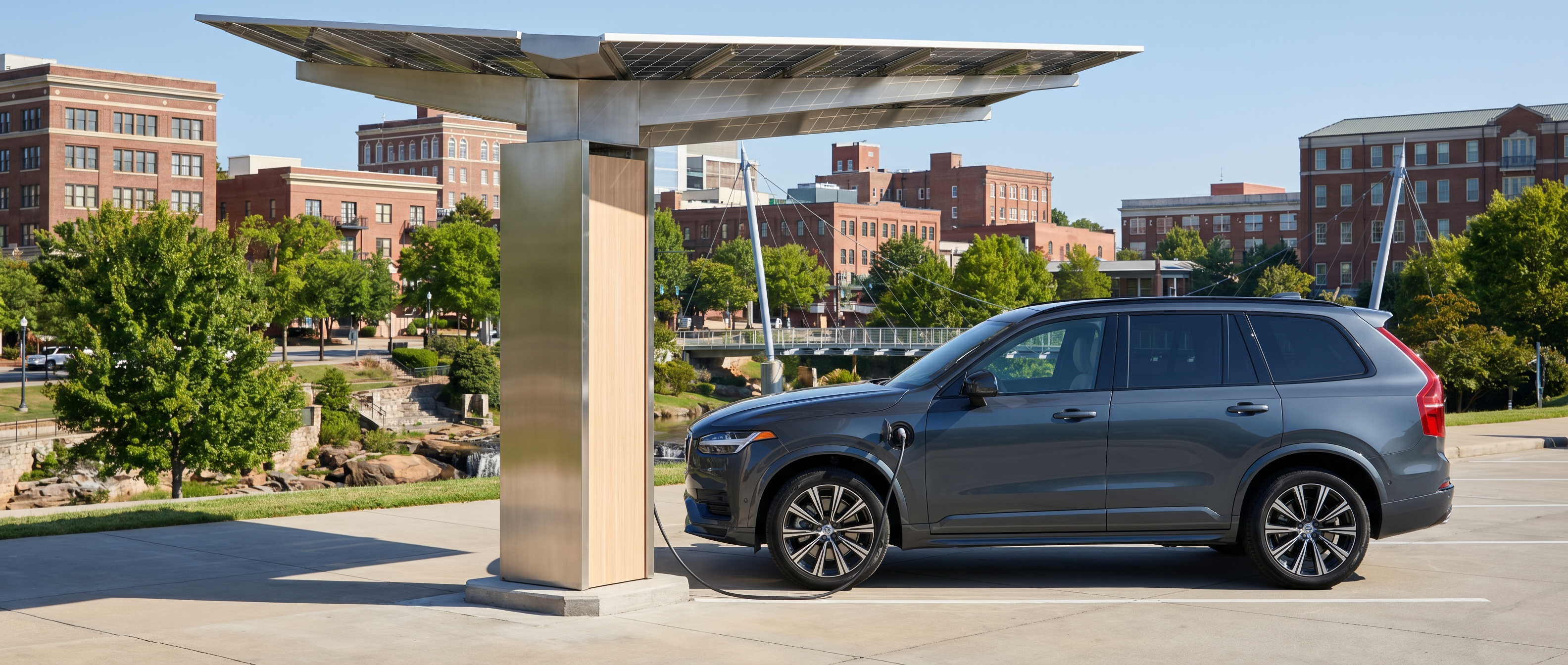
Local charging infrastructure has adapted to these realities. Many public charging stations near popular destinations like Falls Park on the Reedy and the Swamp Rabbit Trail now feature covered parking to protect vehicles from direct sun exposure during charging sessions. This seemingly small detail makes a significant difference in maintaining battery health and charging efficiency during peak summer heat.
Top Electric Vehicles Built for Hot, Humid Conditions
The Volvo® XC40 Recharge and C40 Recharge stand out as exceptional choices for South Carolina's climate thanks to their advanced battery thermal management systems. These systems maintain optimal battery temperature even when parked at Haywood Mall or Fluor Field during scorching afternoon games, preserving both range and long-term battery health.
Key features that excel in SC weather:
- Active battery cooling that prevents degradation
- Pre-conditioning capability via smartphone app
- Heat pump technology for efficient climate control
- Sealed battery compartments that handle humidity
- Cabin overheat protection when parked
The larger Volvo EX90 takes climate adaptation even further with its bi-directional charging capability. During those infamous Upstate summer thunderstorms that knock out power, your EX90 can actually power essential home appliances - a feature that's moved from "nice to have" to "game changer" for many Greenville families.
Climate Performance Comparison
| Model | Summer Range Loss | Winter Range Loss | Charging Speed at 95°F |
|---|---|---|---|
| XC40 Recharge | 15-17% | 5-7% | 95% of normal |
| C40 Recharge | 14-16% | 5-7% | 95% of normal |
| EX90 | 12-15% | 4-6% | 97% of normal |
| XC60 Plug-in Hybrid | 10-12% | 3-5% | Not affected |
For drivers splitting time between Greenville and the coast, the plug-in hybrid XC60 and XC90 models offer compelling flexibility. Their gasoline engines eliminate range anxiety for those Charleston beach trips while still providing 30+ miles of pure electric driving for daily Greenville commutes.
Managing EV Battery Life in Southern Heat
Protecting your EV's battery from South Carolina's intense summer heat requires more strategy than dealing with our occasional winter cold snaps. The key lies in understanding that heat degrades lithium-ion batteries faster than cold, making summer care crucial for long-term vehicle health.
Smart parking choices make a measurable difference. When visiting downtown Greenville or shopping at Magnolia Park, seek out covered parking decks rather than surface lots. Even partial shade significantly reduces battery temperature compared to direct sun exposure. Many EV owners report their vehicles' internal temperature sensors showing 20-30 degree differences between shaded and unshaded parking.
Battery Protection Checklist
- ✓ Use scheduled departure times to pre-cool while plugged in
- ✓ Avoid charging immediately after highway driving in summer
- ✓ Keep charge levels between 20-80% for daily use
- ✓ Park in shade whenever possible
- ✓ Enable cabin overheat protection features
- ✓ Consider tinted windows for additional heat reduction
Pro tip: Set your charging to complete just before departure rather than immediately when you plug in. This prevents the battery from sitting at high charge levels in high heat - a combination that accelerates degradation.
The Volvo EX30 demonstrates how manufacturers are adapting to climate realities. Its compact design doesn't just make it perfect for navigating Main Street's tight parking - the smaller battery pack also cools more efficiently, maintaining performance even during heat waves. Plus, its lower price point means the money you save can go toward installing a Level 2 home charger with smart scheduling capabilities.
Year-Round Charging Strategies for the Upstate
Greenville's growing charging network reflects our unique climate considerations, with many new stations incorporating weather-resistant designs and strategic placement. The city's investment in charging infrastructure along the Swamp Rabbit Trail and near Paris Mountain State Park shows forward thinking about where people actually need to charge.
Summer charging requires different tactics than winter. During peak heat, charge during early morning or evening hours when ambient temperatures drop below 85°F. This isn't just about comfort while you wait - cooler temperatures mean faster charging speeds and less stress on your battery's cooling system. The new DC fast chargers at Cherrydale Point specifically chose north-facing orientations to minimize afternoon sun exposure.
Seasonal Charging Speed Variations
| Temperature Range | Charging Speed Impact | Best Charging Times |
|---|---|---|
| 32-50°F | 85-90% of maximum | Any time |
| 50-70°F | 100% of maximum | Any time |
| 70-85°F | 95-100% of maximum | Avoid 2-5 PM |
| 85-100°F | 80-90% of maximum | Before 10 AM, after 7 PM |
For workplace charging, companies throughout the Golden Strip corridor from Greenville to Spartanburg increasingly offer covered charging stations. This employee perk has practical benefits - vehicles charged in shade maintain better battery health and arrive home with more consistent range regardless of weather conditions.
The XC90 plug-in hybrid particularly shines in our climate, offering the flexibility to use electric power for cool morning commutes and gasoline for hot afternoon returns. This adaptability means never worrying about finding a shaded charging spot during summer's peak heat.
Common Questions About EVs in Greenville, SC
How does humidity affect electric vehicle batteries in South Carolina?
Modern EVs feature sealed battery compartments that completely protect against South Carolina's humidity. The Volvo XC40 Recharge and other current models use moisture barriers and thermal management systems that prevent any humidity-related issues, even during our steamiest August days.
What's the best EV for commuting from Simpsonville to downtown Greenville?
The Volvo EX30 excels for this 12-mile commute with its compact size for downtown parking and efficient battery that easily handles the route year-round. Its 250+ mile range means you'll only need to charge twice a week, even accounting for summer climate control use.
Do electric vehicles perform well in the Blue Ridge Mountain areas near Greenville?
Electric vehicles actually outperform gas vehicles in mountain driving thanks to regenerative braking that recovers energy on descents. The XC60 plug-in hybrid offers ideal versatility for trips to Table Rock State Park or Caesar's Head, using electric power for efficiency and gas backup for extended mountain adventures.
Where are the most reliable EV charging stations in Greenville, SC?
Greenville's most dependable charging locations include the covered stations at Haywood Mall, McAlister Square, and the newer DC fast chargers along I-85. Downtown features multiple Level 2 chargers near Main Street, while hotels along Pelham Road increasingly offer overnight charging options.
How much does air conditioning use affect EV range in SC summers?
Running air conditioning continuously in 95°F weather typically reduces range by 15-20% in most EVs. However, pre-cooling your Volvo while plugged in and using efficient climate settings can minimize this impact to just 10-12%, making summer driving comfortable without major range anxiety.
Should I get a plug-in hybrid or full EV for South Carolina driving?
Full EVs like the EX90 work excellently for most South Carolina drivers, especially with our mild winters and growing charging network. However, plug-in hybrids like the XC90 offer peace of mind for frequent trips to Charleston or Atlanta without planning charging stops.
Making the Switch to Electric in the Palmetto State
South Carolina's climate actually favors electric vehicle adoption more than many northern states, despite our hot summers. The minimal winter range loss combined with increasing charging infrastructure makes EVs increasingly practical for Upstate residents. Whether you choose a fully electric model for maximum efficiency or a plug-in hybrid for ultimate flexibility, modern EVs handle our climate with impressive capability.
The key lies in selecting a model with robust thermal management and following smart charging practices that protect your investment. As Greenville continues expanding its charging network and more businesses add workplace charging, the convenience factor only improves. Ready to experience how well electric vehicles perform in South Carolina's climate? Visit Volvo Cars Greenville to test drive the latest electric and plug-in hybrid models and discover which option best fits your driving needs.
Categories:
Social