
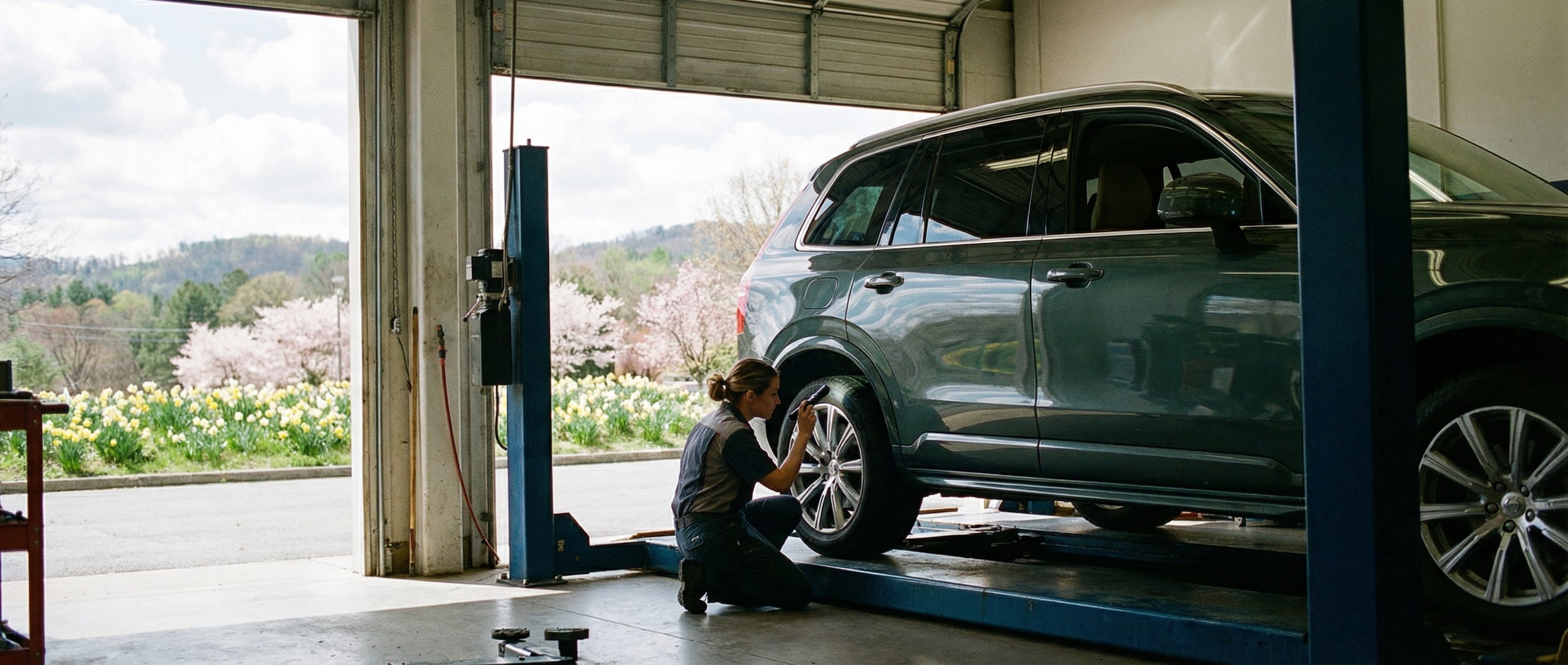
Most Greenville, SC drivers don't realize that running winter tires past 50°F consistently can reduce their lifespan by up to 60% - and with our early spring temperatures already hitting the 60s by March, timing matters more than you might think. If you've been running winter tires on your Volvo® through our mild South Carolina winters, understanding when to make the switch can save you hundreds in premature tire replacement while improving your vehicle's performance. This guide breaks down exactly when and why Greenville area drivers should transition to all-season or summer tires, considering our unique Upstate weather patterns and driving conditions from the Blue Ridge Parkway down to I-85.
Understanding Greenville's Spring Temperature Patterns
Greenville's spring arrives earlier than many northern cities, with average daily temperatures consistently exceeding 50°F by mid-March - the critical threshold for winter tire performance degradation. Our location between the Blue Ridge Mountains and the Piedmont creates temperature swings that can catch drivers off guard. While Travelers Rest might see morning temperatures in the 40s, downtown Greenville often reaches the mid-60s by afternoon.
Did you know? Winter tire rubber compounds start breaking down rapidly above 45°F, and Greenville averages 58°F by late March according to National Weather Service data.
These temperature variations mean your XC60 or XC90 might experience different tire performance throughout a single day's commute. The softer rubber compounds in winter tires, designed to stay flexible in cold conditions, become too soft in warmer weather. This accelerated wear isn't just about tire longevity - it affects braking distances and handling precision.
Local driving patterns compound the issue. Whether you're navigating the curves near Paris Mountain State Park or cruising I-385 toward Mauldin, winter tires in warm weather create excessive heat buildup. This heat accelerates tread wear and can even cause tire failure in extreme cases.
The 7°C (45°F) Rule for South Carolina Drivers
The automotive industry's 7°C rule states that winter tires lose their advantages once temperatures consistently stay above 45°F - a threshold Greenville typically crosses by early March. This isn't just a guideline; it's based on the chemistry of tire compounds. Winter tires use specialized rubber that remains pliable in cold weather but becomes excessively soft in warmer conditions.
For Volvo drivers in the Upstate, this rule requires some local interpretation. Our February weather can swing from 35°F to 65°F within days, making the decision more complex than in regions with gradual seasonal transitions. The key word is "consistently" - a few cold mornings don't justify keeping winter tires on through April.
When to Monitor Temperatures:
- Check 10-day forecasts starting in late February
- Note overnight lows staying above 40°F
- Watch for daytime highs regularly exceeding 60°F
- Consider your typical driving times and routes
- Factor in elevation changes if you drive between Greenville and the mountains
Your XC40's performance characteristics change noticeably when winter tires operate outside their design range. Steering response becomes less precise, and the normally confident handling Volvo engineers built into your vehicle feels compromised. The difference becomes especially apparent on dry pavement, where winter tires can't match the grip and stability of appropriate seasonal rubber.
Signs Your Winter Tires Need to Come Off
Beyond temperature readings, your Volvo will tell you when winter tires have overstayed their welcome through several clear indicators. Increased road noise becomes noticeable first - the aggressive tread blocks designed for snow create a distinctive hum on dry pavement that grows louder as temperatures rise. This isn't just annoying; it signals accelerated wear occurring at the molecular level.
Visual inspection reveals telltale signs:
- Tread blocks showing unusual wear patterns
- Rubber appearing shiny or greasy
- Edges of tread blocks rounding off prematurely
- Visible heat checking (small cracks) in the rubber
- Uneven wear across the tire surface
Driving dynamics change too. Your XC90 plug-in hybrid might feel less responsive during lane changes on Wade Hampton Boulevard. Braking distances increase noticeably - what should be a confident stop becomes a longer, less predictable process. Fuel economy also suffers as the soft rubber creates more rolling resistance.
Pro tip: Mark your calendar when you install winter tires and set a reminder for early March to start monitoring conditions for the switch back.
The financial impact compounds quickly. Winter tires run in warm weather can lose 25% of their useful life in just one month of inappropriate use. For premium Volvo-approved tires, that translates to hundreds of dollars in premature replacement costs.
Timing Your Switch: Greenville's Ideal Window
Historical weather data shows Greenville's optimal tire switching window typically falls between March 10-25, though recent years have trended earlier. This timing balances the risk of late-season cold snaps against the certainty of warming trends. Waiting until April almost guarantees you're running winter tires in conditions that actively degrade them.
Greenville Spring Tire Timeline:
- Late February: Begin monitoring extended forecasts
- Early March: Schedule your appointment at the service center
- March 10-25: Ideal switching window for most years
- Early April: Latest reasonable date for tire changes
- Mid-April: Winter tires should definitely be in storage
Special considerations apply for different driving patterns. If you frequently travel to higher elevations near Caesar's Head State Park or the Blue Ridge Parkway, you might extend your winter tire season by a week or two. Conversely, drivers who primarily stay in the valley between Simpsonville and Greer can switch earlier with confidence.
Your Volvo's specific model also influences timing. The lighter EX30 transitions well to all-seasons earlier than the heavier XC90 plug-in hybrid, which benefits from winter tires' additional grip for a bit longer. Regardless of model, once overnight temperatures consistently stay above 40°F, the benefits of winter tires disappear while the drawbacks multiply.
What Happens If You Wait Too Long
Running winter tires through Greenville's warm spring creates cascading problems beyond simple tread wear. The soft compound designed for freezing temperatures becomes dangerously unpredictable in heat. Tread blocks can actually chunk off during hard cornering or emergency maneuvers - imagine this happening while navigating the Woodruff Road traffic corridor.
Performance degradation happens across multiple dimensions:
Handling Issues:- Excessive body roll in corners
- Vague steering feel
- Longer stopping distances
- Reduced stability at highway speeds
- Unpredictable behavior in emergency maneuvers
- Accelerated center tread wear
- Heat-induced compound breakdown
- Potential for sudden tread separation
- Permanently loss of winter performance capability
- Shortened overall tire lifespan by 40-60%
The safety implications extend beyond your Volvo. Compromised braking and handling put other drivers at risk, especially in our heavy traffic areas around Haywood Mall or during Fluor Field events. Insurance considerations also apply - running inappropriate tires for conditions could impact claim outcomes if an incident occurs.
View our new inventory to see models equipped with Volvo's advanced tire pressure monitoring systems that help track tire performance throughout the seasons.
Storage Solutions for Your Winter Tires
Proper storage extends winter tire life dramatically, and Greenville's humid climate requires specific precautions. Clean tires thoroughly before storage - brake dust and road chemicals accelerate rubber degradation. A simple soap and water wash followed by complete drying prevents compound breakdown during the seven months they'll spend waiting for next winter.
Ideal Storage Conditions:
- Temperature between 50-70°F
- Away from direct sunlight
- Protected from ozone sources (electric motors, furnaces)
- Stacked horizontally if on rims
- Stored vertically if unmounted
- Wrapped in opaque plastic bags
Many Greenville residents lack suitable storage space. Basements work well if moisture-controlled, but our humid summers make garages risky without climate control. Consider professional tire storage services - several area shops offer summer storage for winter sets, including proper cleaning and inspection.
Pro tip: Take photos of your tread depth before storage using a penny for reference. This helps track wear patterns and plan replacement timing.
For apartment dwellers near downtown or students at Furman University, tire storage poses unique challenges. Professional storage becomes especially valuable here, eliminating the hassle while ensuring your investment stays protected. Some facilities even offer reminder services for seasonal switches.
Professional vs DIY Tire Changes
While changing tires seems straightforward, modern Volvos include sophisticated systems requiring proper procedures. Your XC60 plug-in hybrid's tire pressure monitoring system needs recalibration after switches. All-wheel-drive models demand careful attention to matching tire diameters to prevent drivetrain damage.
Professional Service Advantages:
- Proper torque specifications for your specific model
- TPMS reset and calibration
- Inspection for suspension and brake wear
- Wheel alignment check
- Safe disposal of old tires if needed
- Storage solutions available
DIY efforts save money but risk expensive mistakes. Over-torquing lug nuts can warp brake rotors - a $800+ repair on modern Volvos. Under-torquing creates dangerous wheel loosening risks. Without proper equipment, achieving Volvo's specified 140 Nm torque consistently across all wheels proves difficult.
Professional services also spot issues DIY efforts miss. Uneven tire wear might indicate alignment problems or worn suspension components. Early detection during seasonal changes prevents costlier repairs later. Technicians can also advise whether your all-seasons need replacement before summer or if rotation might extend their life.
Time factors matter too. Professional changes typically take 45 minutes while DIY efforts often stretch to half a day, especially fighting with corroded wheels or stuck lug nuts. Factor in the value of your time and potential for injury, and professional service often makes more sense.
Ready to schedule service for your seasonal tire change? Our certified technicians understand Volvo's specific requirements.
The All-Season Alternative for Upstate SC
Greenville's relatively mild winters raise a valid question: do you really need dedicated winter tires? Modern all-season tires have improved significantly, and our typical winter might see only 3-5 days with actual snow or ice accumulation. For many Upstate drivers, quality all-seasons provide sufficient year-round capability.
All-Season Advantages:
- No seasonal changes needed
- Lower total cost over time
- Consistent performance year-round
- Suitable for 95% of Greenville driving conditions
- Simplified maintenance schedule
Winter Tire Scenarios:
- Frequent travel to mountain areas
- Early morning commutes before road treatment
- Performance-oriented driving preferences
- Maximum safety priority regardless of conditions
- Vehicles lacking advanced traction control
Your driving patterns determine the best choice. Someone commuting from Taylors to downtown Greenville on mostly treated roads differs vastly from a Landrum resident navigating elevation changes and shaded mountain roads. Consider your risk tolerance too - winter tires provide insurance for those rare but potentially dangerous conditions.
Modern Volvo safety systems like all-wheel drive and advanced traction control help all-season tires perform better in marginal conditions. However, these systems can't overcome physics - winter tires still provide superior cold-weather grip when temperatures drop below 45°F and precipitation falls.
Common Questions About Spring Tire Changes in Greenville, SC
When exactly should I switch from winter tires on my Volvo in Greenville, SC?
Switch your winter tires when daily temperatures consistently stay above 45°F, typically between March 10-25 in Greenville. Monitor 10-day forecasts starting in late February, and schedule your change when overnight lows remain above 40°F. The exact timing varies yearly, but waiting past early April risks significant tire damage and reduced performance.
Can I leave winter tires on year-round on my Volvo XC90 to avoid switching?
Running winter tires year-round in Greenville's climate will reduce their lifespan by 60% and compromise your XC90's handling and braking performance. Summer temperatures above 70°F cause rapid compound breakdown, increased fuel consumption, and unpredictable handling. The soft rubber also wears excessively on hot pavement, requiring premature replacement.
How do Greenville's temperature swings affect tire performance on Volvo vehicles?
Greenville's spring temperature variations between mountain areas and downtown create challenging conditions for tire selection. Your Volvo might experience 20-degree temperature differences during a single commute from Travelers Rest to Simpsonville. These swings mean winter tires perform well during cool mornings but degrade rapidly during warm afternoons, making timely seasonal changes crucial.
What's the cost difference between seasonal tire changes and all-seasons for Upstate SC driving?
Initial winter tire investment runs $800-1,500 for quality tires, plus $100-150 twice yearly for changes. However, using two sets doubles the lifespan of each, making long-term costs comparable to all-seasons. For Greenville's mild winters with limited snow days, premium all-seasons often provide the best value unless you frequently drive mountain roads.
Where can I store winter tires during South Carolina's humid summers?
Store winter tires in a climate-controlled space between 50-70°F, away from humidity and sunlight. Greenville's humid summers make garage storage risky without air conditioning. Clean tires thoroughly, wrap in opaque plastic bags, and stack horizontally if mounted on rims. Many local shops offer professional summer storage services for $75-150 per season.
Do all Volvo models need winter tires in the Greenville area?
Not all Volvo models require winter tires for typical Greenville driving conditions. All-wheel drive models like the XC60 and XC90 perform well with quality all-seasons for most Upstate winter conditions. However, drivers frequently traveling to higher elevations near Paris Mountain or Caesar's Head benefit from winter tires regardless of their model's drivetrain configuration.
Making the Smart Choice for Your Volvo
Timing your spring tire switch protects both your investment and your safety on Greenville roads. Those few weeks of running winter tires in inappropriate temperatures might seem harmless, but the accelerated wear and compromised performance create real risks and costs. Whether you choose professional service or tackle the job yourself, marking your calendar for mid-March ensures you catch our region's optimal switching window.
Remember that your Volvo's sophisticated engineering works best with appropriate tires for the season. From the nimble EX30 navigating downtown streets to the capable XC90 hauling families to Table Rock State Park, matching tires to conditions unlocks the full potential of Swedish safety and performance engineering. The team at Volvo Cars Greenville understands our unique Upstate climate and can guide you through seasonal tire decisions that make sense for your specific driving patterns and needs.
Categories:
Social