
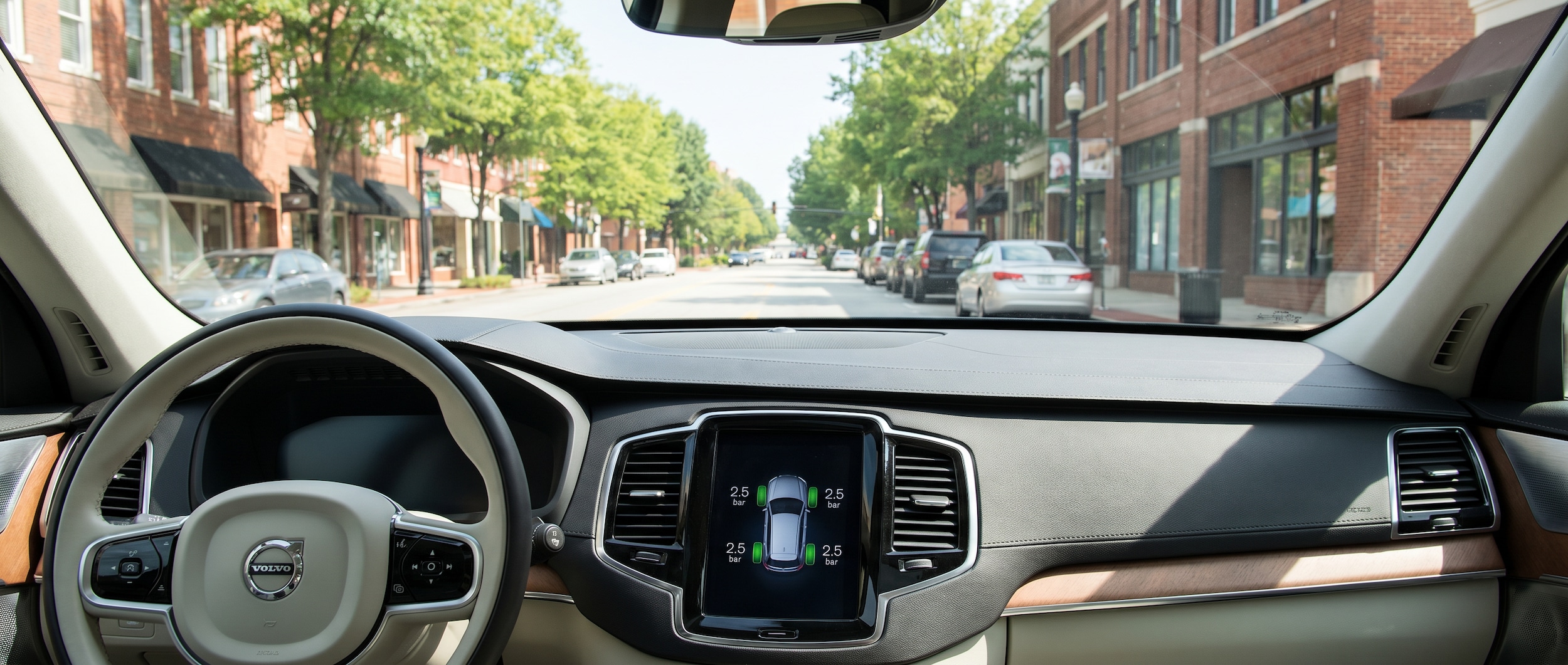
Your Volvo's® Tire Pressure Monitoring System (TPMS) alerts you within minutes when tire pressure drops below safe levels, helping prevent the 11,000 tire-related crashes that occur annually in the United States. For drivers navigating Greenville, SC's varied terrain from downtown streets to the Blue Ridge Parkway, this technology provides essential safety monitoring. Understanding how your TPMS works, recognizing its signals, and knowing when professional service is needed can extend tire life by up to 25% and improve your fuel economy.
How Volvo's Advanced TPMS Technology Works
Each tire on your XC60™ or XC90™ contains a sensor smaller than a golf ball that measures pressure 30 times per second and transmits data wirelessly to your vehicle's computer. Volvo's system differs from basic TPMS technology by monitoring not just pressure loss, but also temperature changes and pressure variations between tires. This sophisticated approach means you'll receive warnings before a slow leak becomes a dangerous blowout on I-85 or while climbing Paris Mountain.
The system activates automatically when you start your vehicle, performing a self-check that takes approximately 20 seconds. During this time, sensors verify their battery status, confirm signal strength, and establish baseline pressure readings. Your dashboard displays either individual tire pressures or a simple status indicator, depending on your model year and trim level.
Did you know? Volvo's TPMS can detect pressure changes as small as 1 PSI, making it one of the most sensitive systems available in the automotive industry.
Reading and Responding to TPMS Warnings
A solid yellow TPMS light indicates one or more tires have dropped 25% below recommended pressure - immediate attention is required. When this warning appears while driving through Travelers Rest or commuting from Mauldin, find a safe location to check your tires. The light's position on your dashboard varies by model, but it always resembles a horseshoe shape with an exclamation point inside.
A flashing TPMS light that blinks for 60-90 seconds before staying solid signals a different issue: system malfunction. This pattern typically indicates:
- Sensor battery depletion (common after 7-10 years)
- Signal interference from aftermarket electronics
- Damage from road debris or harsh impacts
- Temperature-related sensor issues during extreme weather
Understanding Pressure Recommendations by Model:
| Volvo Model | Front PSI | Rear PSI | Cold Weather Adjustment |
|---|---|---|---|
| XC40™ | 35-38 | 35-38 | +3-4 PSI |
| XC60™ | 36-39 | 36-39 | +3-4 PSI |
| XC90™ | 38-41 | 40-43 | +4-5 PSI |
| V60 Cross Country™ | 35-38 | 35-38 | +3-4 PSI |
Remember that these pressures should be checked when tires are cold, meaning the vehicle hasn't been driven for at least three hours. The Michelin® or Pirelli® tires equipped on most Volvo models perform best when maintained within these ranges.
Common TPMS Issues in the Greenville Area
Temperature swings between summer heat and cool mountain mornings near Caesars Head State Park create unique challenges for tire pressure maintenance. A 20-degree temperature drop can reduce tire pressure by 2-3 PSI, triggering TPMS warnings during fall and winter months. This explains why many Simpsonville and Greer residents see warning lights during the first cold snap each year.
Road conditions also impact TPMS reliability throughout the Upstate region. Construction zones on Woodruff Road and deteriorating surfaces on secondary routes can damage sensors or cause premature battery drain. Pothole impacts transfer shock directly to wheel-mounted sensors, potentially breaking internal components or disrupting calibration.
Pro tip: Schedule TPMS inspections with tire rotations every 5,000-7,500 miles to catch sensor issues before they trigger warning lights.
Additional factors affecting TPMS performance include:
- Metal valve stem corrosion from winter road salt
- Sensor interference near the BMW plant's industrial equipment
- False readings after tire service at non-Volvo facilities
- Battery degradation accelerated by extreme summer heat
Maintaining Your TPMS for Long-Term Reliability
Proper TPMS maintenance extends beyond simply responding to warning lights. Regular system checks during routine service help identify weakening sensor batteries before complete failure occurs. The service technicians at our Greenville location use Volvo-specific diagnostic equipment that reads battery voltage, signal strength, and sensor ID codes to predict potential issues.
Essential TPMS Maintenance Schedule:
- Monthly: Verify tire pressures match door jamb specifications
- Quarterly: Inspect valve stems for cracks or corrosion
- Semi-annually: Request TPMS diagnostic scan during service
- Annually: Clean sensor areas when mounting seasonal tires
- Every 5 years: Plan for preventive sensor battery replacement
When replacing tires, whether at our facility or elsewhere, ensure technicians handle TPMS sensors carefully. Improper removal techniques crack sensor housings or damage internal antennas. Quality shops use specialized tools that protect these $75-150 components during tire changes.
Seasonal considerations matter for Greenville-area Volvo owners. Summer heat expanding on I-385 can push pressures above optimal levels, while winter cold contracts air molecules, reducing pressure. Check pressures monthly and adjust according to the temperature compensation chart provided in your owner's manual.
Professional TPMS Service and Replacement
Sensor replacement becomes necessary when batteries deplete, typically between 7-10 years or 100,000-150,000 miles. Unlike some maintenance items, TPMS sensors cannot be serviced piecemeal - the entire unit requires replacement. Modern Volvo models use either direct-mount or band-mount sensors, each requiring specific installation procedures and programming sequences.
Browse our new inventory to explore models featuring the latest TPMS technology, including the all-electric EX90™ with predictive pressure monitoring.
Signs You Need Professional TPMS Service:
- Warning light remains on after proper inflation
- Intermittent false warnings with verified correct pressures
- No warnings despite obviously low tires
- Display shows dashes instead of pressure readings
- System requires frequent resets
The recalibration process after sensor replacement involves more than simple button pressing. Technicians must program each sensor's unique ID into your vehicle's computer, establish communication protocols, and verify proper operation at various speeds. This ensures accurate warnings whether you're cruising through downtown Greenville or accelerating onto Wade Hampton Boulevard.
Common Questions About Volvo's Tire Pressure Monitoring System in Greenville, SC
How often should I check tire pressure in my Volvo if the TPMS light isn't on?
Check your Volvo's tire pressure monthly, regardless of TPMS status, especially before long trips to the mountains or coast. Temperature changes in the Greenville area can affect pressure by 1 PSI for every 10-degree shift. Manual checks catch gradual pressure loss that hasn't yet triggered the 25% TPMS warning threshold.
Can I replace TPMS sensors myself on my XC60 or XC90?
TPMS sensor replacement requires specialized programming tools to sync new sensors with your Volvo's computer system. Without proper equipment, new sensors won't communicate with your vehicle. Professional installation ensures correct torque specifications, preventing air leaks and sensor damage during mounting.
Why does my Volvo's TPMS light come on during cold Greenville mornings?
Cold air contracts, reducing tire pressure by approximately 1 PSI per 10-degree temperature drop, common during Greenville's winter mornings. Your Volvo's TPMS triggers warnings when pressure drops 25% below recommended levels. Adding 3-4 PSI during winter months compensates for temperature-related pressure loss.
Does Volvo's TPMS monitor the spare tire?
Most Volvo models don't monitor spare tire pressure, though some XC90 configurations include spare tire sensors. Check your owner's manual for model-specific information. Regular manual checks of spare tire pressure ensure it's ready when needed on I-85 or remote Upstate roads.
How much does TPMS sensor replacement cost for Volvo vehicles?
TPMS sensor replacement varies by model and sensor type, with original equipment sensors designed specifically for Volvo's systems. Aftermarket options may seem economical but often lack the durability and precision of genuine Volvo parts. Professional installation includes programming and calibration to ensure proper system function.
Can aftermarket wheels affect my Volvo's TPMS accuracy?
Aftermarket wheels can interfere with TPMS signals if they contain excessive metal or use incompatible valve stem angles. Some wheel designs block sensor transmissions or create signal reflection. Consult Volvo-certified technicians before installing aftermarket wheels to ensure TPMS compatibility.
Your Tire Pressure Monitoring System serves as a silent guardian, continuously protecting you and your passengers on every journey through the Upstate. Regular maintenance, prompt response to warnings, and professional service when needed ensure this critical safety system operates flawlessly for years. Whether commuting to Furman University, exploring Campbell's Covered Bridge, or navigating Haywood Mall traffic, properly functioning TPMS technology provides confidence in your Volvo's tire integrity.
When warning lights appear or you suspect TPMS issues, trust the certified technicians at Volvo Cars Greenville who understand these sophisticated systems inside and out. Our team combines technical expertise with genuine care for your safety, ensuring your Volvo performs exactly as Swedish engineers intended.
Categories:
Social