
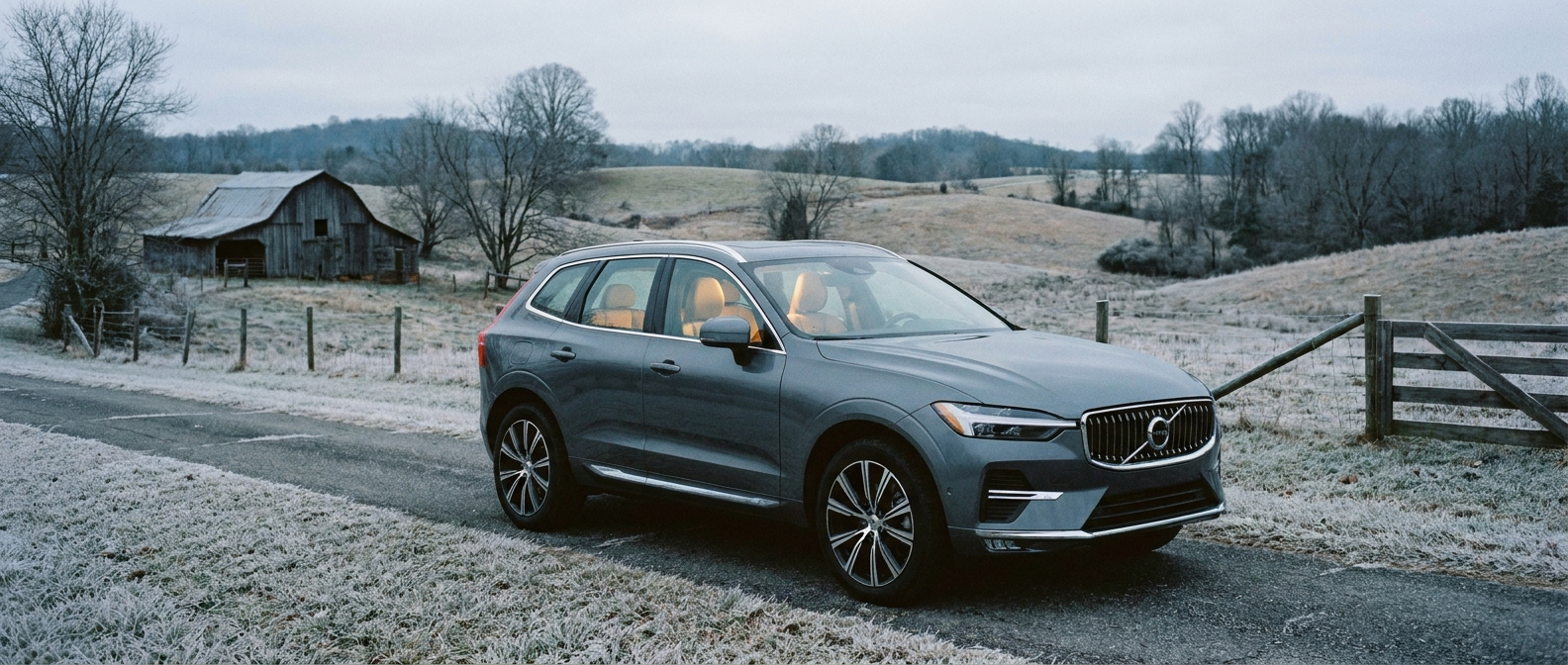
Upstate SC winters are mild. We know. But "mild" does a lot of quiet damage to unprepared vehicles every November, and a Volvo that skips prep in a temperate climate can need just as much attention as one that spent the season in Michigan. The difference here is subtler, and the warning signs arrive later. Here's what to check before the first hard freeze lands.
Schedule your Volvo winter service appointment with our team at Volvo Cars Greenville
What Goes on the Early Winter Prep Checklist?
Work through this list before mid-November and you'll have covered the items that actually matter in a temperate climate like ours, from tire pressure to coolant to Recharge preconditioning. The NWS climate record for Greenville-Spartanburg puts the average first freeze at November 12, so the window is genuinely narrow.
- [ ] Tire pressure. Cold morning check, door-placard spec only (not the sidewall)
- [ ] Tread depth. 4/32" or better; below that, wet pavement stopping distance climbs fast
- [ ] Battery load test. Voltage alone won't reveal capacity loss in cool temps
- [ ] Coolant concentration. Confirmed at 50% glycol, Volvo-approved only
- [ ] Cabin air filter, a clogged filter slows defrost; swap it if it's been more than a year
- [ ] Wiper blades. Inspect for cracking or chattering edges; add winter-rated washer fluid
- [ ] All exterior lights. Shorter days, longer commutes, frequent fog; check every bulb
- [ ] Brake inspection. Cold, wet rotors need full stopping-power confidence
- [ ] Recharge / EV owners: preconditioning schedule. Confirm it's active in the Volvo Cars app before cold mornings begin
| Checklist Item | Why It Matters Here |
|---|---|
| Tire pressure (cold, door-placard) | Physics: every 10F drop costs roughly 1 PSI. An I-85 commute on a 35-degree Greenville morning is already a different car than the one you drove in September. |
| Tread depth | Upstate winters are mostly rain and freezing rain, not snow. Wet-pavement grip is the real issue. |
| Battery load test | Capacity can fall as the mercury dips below 40F; a battery that tests fine in October may struggle in January. |
| Coolant concentration | Volvo's spec is 50% glycol, protecting to -31F. The point isn't surviving a Greenville cold snap; it's protecting precision Swedish engineering from incremental stress. |
| Cabin air filter | A restricted filter slows the defroster on cold I-385 commutes. A fresh filter is the cheapest visibility upgrade on the list. |
| Wiper blades + washer fluid | Winter-rated fluid won't freeze in the reservoir or on the glass mid-wipe. Regular fluid can. |
| Lights | November through February, you'll use your headlights at 5 p.m. whether you think about it or not. |
| Brakes | Cold rotors and wet roads require longer stopping distances and more confidence in your pads. |
| Recharge preconditioning | A cold battery operates at reduced capacity. Warming it on grid power before departure costs nothing and preserves your full EV range. |
Why Each Item Matters for an Upstate SC Winter
The mild-climate trap catches careful owners because our winters rarely look severe, which makes it easy to assume the standard maintenance items don't apply to a car that never sees a snowbank. They do apply. They just show up differently here.
Tires and pressure. Volvo specifies 35 PSI cold pressure for the XC60 and the XC60 plug-in hybrid across their standard tire sizes, per Volvo Cars' official documentation. The XC90 (standard configuration) runs 38 PSI, and the XC90 plug-in hybrid is specced at 42 PSI on its larger tire sizes. None of those numbers mean much if you check pressure at noon in a 65-degree garage. The reading has to happen cold, first thing, before the car's moved. On a morning when Greenville is 35 degrees, a tire that held 35 PSI in October can easily sit at 31 or 32. You're not at the TPMS threshold yet (the system won't warn you until roughly 25% below spec, per the federal standard), but handling and tire wear are already paying for it.
On our service lane, the cold-pressure rule is easy to get wrong, because a car that rolls in warm off the highway reads perfectly and then drops below spec after sitting overnight. We check it cold for a reason.
Coolant. Per Volvo's cold-weather driving guidance, the engine coolant must contain 50% glycol (not more, not less) using only Volvo-approved antifreeze. That 50/50 ratio protects to approximately -31F. The tricky part comes at top-off time. Never mix different types of glycol, even a little, since mixing degrades the protection chemistry. If you're unsure what's in the reservoir, our service team can test and correct the concentration in a single appointment.
Recharge and EV owners: the preconditioning habit. Why do generic winter-prep guides skip this part? Because they're written for cold-snow markets where everyone already knows the drill. In Greenville, Recharge drivers can go all fall without preconditioning simply because they haven't felt the range impact yet. A cold battery just won't deliver full range until it warms. Per Volvo's own technical documentation, it operates at reduced capacity and reduced performance until that happens, and the XC90 plug-in hybrid and the XC60 plug-in hybrid are both affected. Preconditioning while plugged in warms the battery using grid power rather than stored charge, so your available EV range stays intact from the first mile. Set it in the Volvo Cars app before a cold front arrives, and you'll run it every morning at no cost.
Volvo Slippery Road Alert: Modern Volvo models use connected safety technology to share real-time road condition data between vehicles. On a freezing morning on I-85 or on the bridge approaches into Downtown Greenville, that alert is worth having active and understood before it first appears.
Next step: If you haven't had a battery load test this season, that's the single highest-value appointment on this list. A load test takes 15 to 20 minutes and tells you far more than a voltage reading. Book it here before the first freeze.
Your Print-and-Go Winter Recap
Take this into November with you, because the whole checklist condenses into nine moves you can hand to a service advisor or tackle over a weekend, and not one of them asks for a full day off work. Here's the short version.
Before November 12 (Greenville's average first freeze date, per NWS records):
- Check tire pressure cold. Morning, before driving, against the door-placard spec for your model
- Inspect tread. 4/32" minimum for wet Upstate conditions
- Schedule a battery load test. Don't let a weak battery surprise you on the coldest morning of the year
- Verify coolant. 50% Volvo-approved glycol; no mixing
- Replace cabin air filter if it's been over a year
- Swap to winter washer fluid and inspect wiper blades for cracking
- Check all exterior lights. Bulbs are inexpensive, visibility isn't negotiable
- Get a brake inspection, especially if you've put significant miles on since spring
- Recharge/EV owners: activate preconditioning in the Volvo Cars app now, not after the first cold-range morning surprises you
That's nine items. None of them needs a full day. Most fold into a single, well-organized service visit.
Schedule Your Winter Volvo Service
Frequently Asked Questions
Does a Volvo in Greenville really need winter prep if it rarely snows?
Yes, and the reason is more nuanced than most guides acknowledge. Greenville averages roughly 3 inches of snow a year, but the Upstate sees around 57 sub-freezing nights annually, according to NOAA climate normals for the region. Practically, that means you'll face more freezing rain and slick bridge surfaces than snowpack, and those conditions stress tires, brakes, wipers, and lights just as hard.
How do I know if my Volvo Recharge needs preconditioning in mild Southern winters?
The short answer is to set it up before you need it, not after. Volvo's own documentation notes that a cold battery displays a snowflake icon on the driver display and operates at reduced capacity until warmed. In Greenville, mornings below 40F are common from November through February, so schedule preconditioning 20 to 30 minutes before your typical departure using the Volvo Cars app.
Categories:
Social